
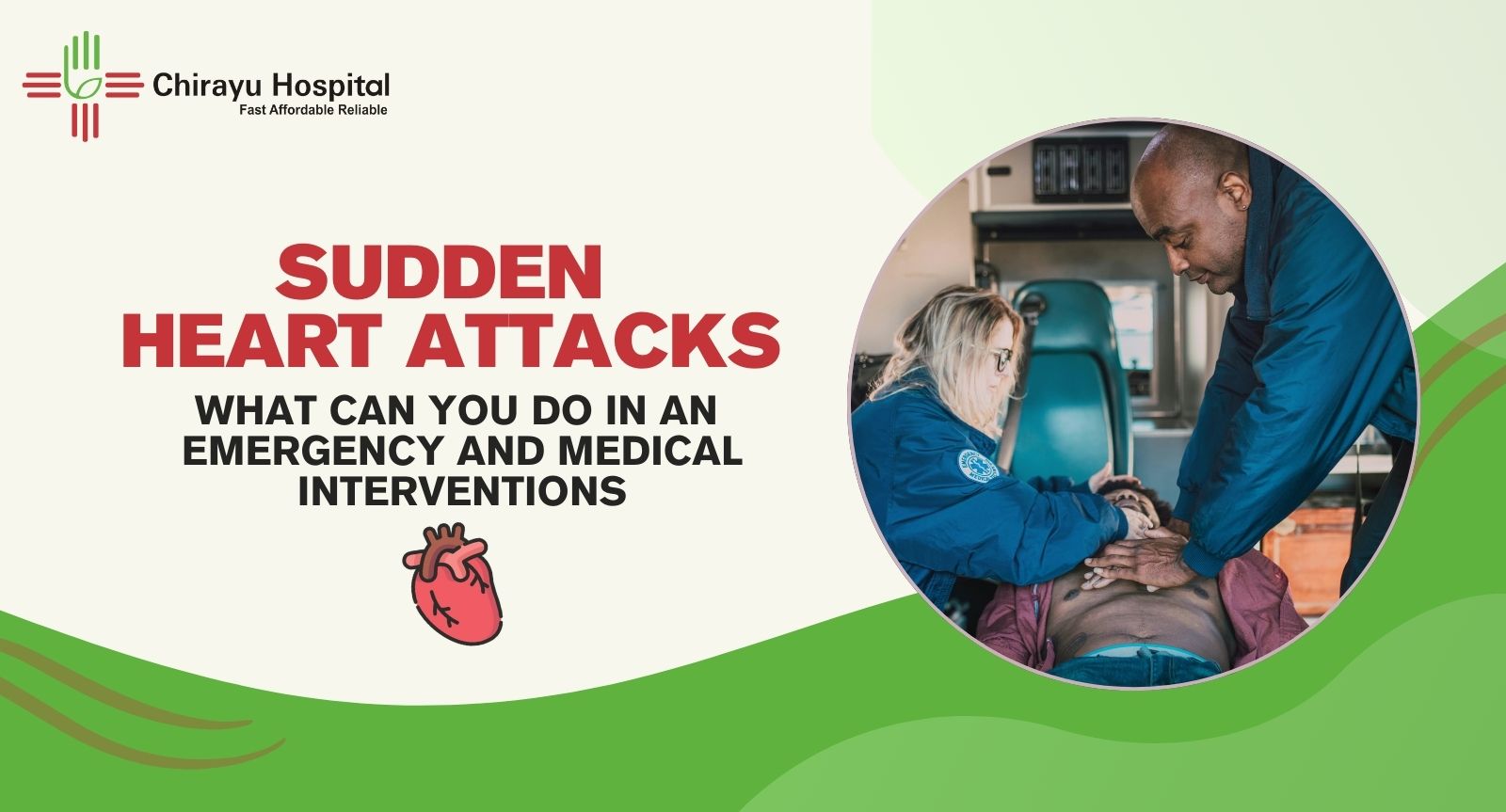
Heart attacks are life-threatening and require immediate action. Having access to the best heart hospital in Jaipur can significantly improve outcomes. However, till the medical help is on its way, there are some immediate actions you can perform as first aid. This article provides tips and steps you can perform immediately when you see someone experiencing a heart attack.
How can you identify the symptoms of a heart attack?
Heart attacks can either come with a variety of symptoms or no symptoms at all! It’s important to be able to recognise its symptoms for help.
Most common symptoms of heart attack
The most common heart attack signs include chest pain, discomfort in the arm, jaw, neck, shortness of breath, dizziness, rapid or irregular heart beating etc.
Difference in symptoms of men and women
Symptoms of heart attack are different among men and women. While the most common symptom among men is chest pain, women on the other hand may experience anxiety, vomiting, back & jaw pain, unusual weakness etc.
How to act immediately
If you notice someone experiencing any of the above symptoms, call for help immediately and, while waiting, take some of the immediate measures given below to increase the chance of survival.
Immediate actions to take when you see someone experiencing a heart attack
While a person is experiencing a heart attack, you should remain calm and take all necessary measures that can increase the chances of survival. Below are some steps,
Call for help
The first step you should take is to call for an ambulance or other emergency services and get professional medical help as soon as possible.
Perform CPR (Cardiopulmonary resuscitation)
CPR is needed if a person collapses and isn’t responding or breathing. To remember CPR, use the CAB technique where C- chest compressions (100-120 per minute), A- opening the person’s airway and B- giving rescue breaths. Lie down the person on their back and repeat the above steps until the emergency help arrives.
Use AED (Automated external defibrillator)
If an AED is available, use it immediately. It is a device that analyses heart rhythm and provides a shock if needed. If defibrillation is given early, it can restore a person’s normal heart rate and can significantly improve the chances of survival.
Chew aspirin if recommended
If the person is conscious and does not have an allergy to aspirin, you can consider giving them aspirin and instructing them to chew instead of swallow. Aspirin prevents blood clotting and thins the blood. However, avoid taking it unless it is recommended by a healthcare professional.
How to manage a heart attack when alone
When you are alone and experience symptoms of a heart attack, call for help from the nearest and best heart hospital in Jaipur. Also, open your doorways for people to enter easily.
Stay calm and lie down straight on the floor. Do not cough repeatedly or apply pressure on your chest by any means and wait for the help to arrive.
Post-medical intervention
Once the medical professionals arrive, here’s what they do,
Coronary angiogram (CAG): A diagnostic method that checks if there are any blockages in the arteries that lead to the heart. A catheter is placed via groin or wrist in the blood vessels and helps take out X-ray images to assess any blockages.
Percutaneous transluminal coronary angioplasty (PTCA): This is a minimally invasive procedure that helps open blockages in the arteries to maintain good blood flow.
Carotid angioplasty and stenting (CAS): It is a process of opening clogged arteries and inserting a small metal coin (stent) to decrease the chance of the artery narrowing again.
So, we can conclude that in case of a heart attack, time is the key, and quick actions are required. Also, having support from the best cardiologist in Jaipur can reduce the risk and increase survival rates. Everyone should learn these basic techniques mentioned above to help someone in an emergency and save their life. Lastly, stay calm and act consciously.
